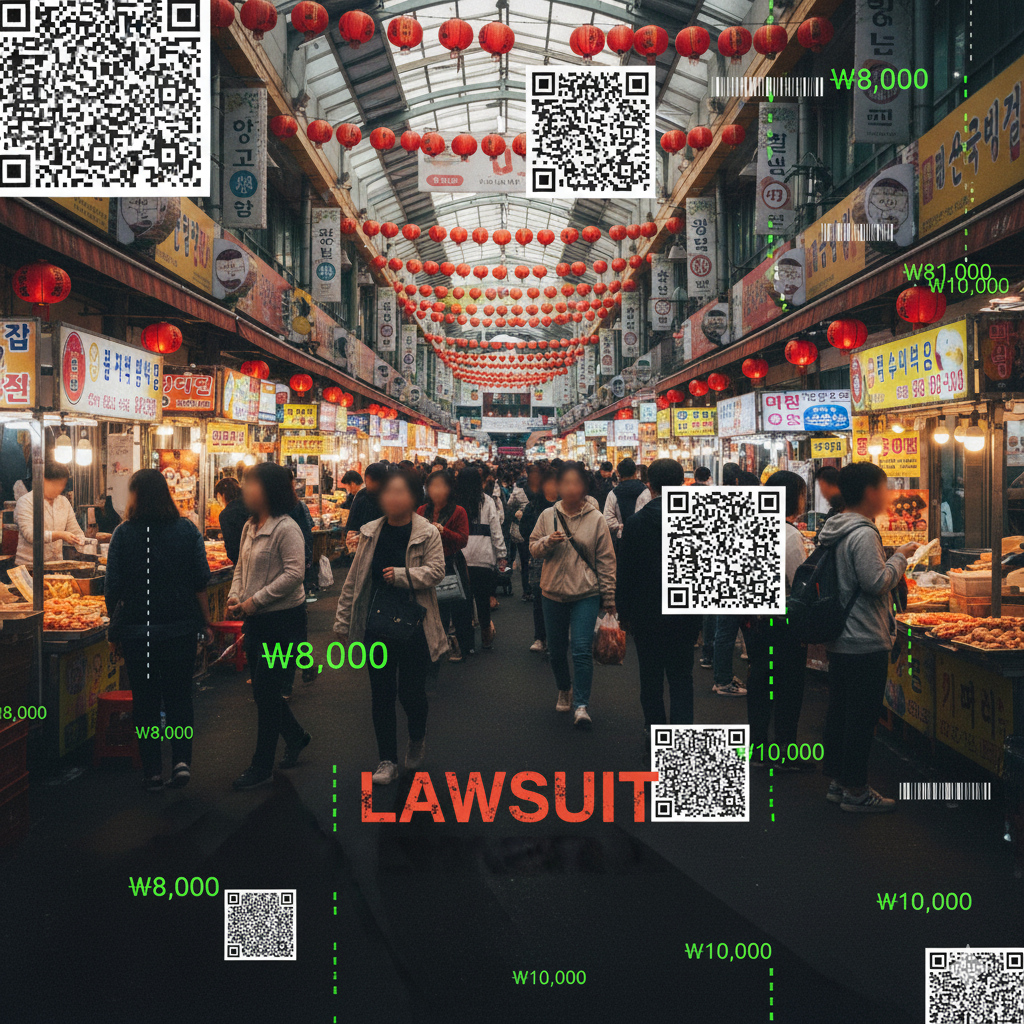
Deep Dive Lab: The Gwangjang Market “K-Overcharging Shock” —
What This Scandal Reveals About Trust in Korean Tourism
1. The Hook: When a Market Turns Into a Moral Question
Gwangjang Market sits in the heart of Jongno, long celebrated as the beating heart of Korean street food. Netflix’s Street Food turned it into a global pilgrimage site—bustling, flavorful, and filled with that trademark Korean warmth.
But now, that warm image has cracked.
A single overcharging incident—what people now call the “K-Overcharging Shock”—has exploded into a ₩300 million (≈$225,000) lawsuit inside the market itself. And what began as a small clash between a vendor and a creator has ballooned into a national debate about ethics, tourism, and trust.
The spark was simple:
A YouTuber with 1.5 million subscribers ordered ₩8,000 sundae, only to be told to pay ₩10,000 because the vendor added meat without consent. Rudeness, questionable hygiene, and the vendor’s dismissive attitude sent the video viral.
But why did this dispute become an international talking point?
This Deep Dive Lab unpacks how outdated market practices collided with modern consumer ethics—creating a costly, painful lesson about trust.
---
2. The Price of Distrust — What the ₩300 Million Lawsuit Really Means
After the scandal, sales in Gwangjang Market plummeted by one-third to nearly half.
Then came the unprecedented move:
👉 The Regular Shop Owners Association filed a ₩300 million lawsuit against the Street Vendor Association.
Why did it escalate into an internal legal war?
● The Collapse of a Collective Trust Asset
Regular vendors argue that irresponsible street stalls have stained the entire market with the label:
“Gwangjang Market = Tourist Trap.”
One vendor’s unethical behavior destroyed everyone’s hard-earned reputation—revealing how trust functions as a shared economic asset in traditional markets.
● The Cost of Broken Trust Becomes Visible
The lawsuit’s specific monetary figure shows how modern markets are shifting:
Not from “market goodwill”
but toward
“Your unethical behavior caused measurable financial damage.”
Gwangjang is transitioning from a culture of “heart and generosity”
→ to a system of accountability, contracts, and economic transparency.
---
3. The Short-Term Survival Trap — Why the Vendor Took the Risk
Why would a vendor risk the entire market’s reputation for a meager extra ₩2,000?
The answer lies in the psychology and pressure inside traditional markets.
● When Old “Flexibility” Becomes Modern “Deception”
Historically, markets allowed informal practices:
adding extra ingredients,
adjusting prices slightly,
blending “service” and sales.
To the vendor, adding meat may have felt like a normal upsell.
But to modern consumers—with clear menus, clear prices, and high expectations—
this is no longer “service.”
It’s deception, because there was no prior consent.
● The Illusion of “One-Time Tourist Transactions”
The tourism boom created a dangerous mindset:
> “I’ll never see this customer again—so let me maximize profit now.”
Combined with rising rental fees and stall payments, street vendors feel constant pressure to secure “today’s earnings,” even at the cost of long-term trust.
---
4. The Betrayal of the Traditional Market Brand
Gwangjang Market wasn’t just selling food.
It was selling an experience, authenticity, and Korean cultural warmth.
But that brand collapses the moment honesty fails.
● The Cultural Contract of “Generosity” Was Broken
Traditional markets thrived on:
giving extra food (service),
friendly banter,
“human warmth” over strict pricing rules.
But when a vendor chooses deception instead of generosity, the cultural contract is broken—and only the demand for strict transparency remains.
● “Rude Grandma” vs “Deceptive Vendor”
A famously blunt or humorous vendor?
Tourists can accept that as culture.
But unannounced price hikes?
Modern consumers see that as crossing a non-negotiable ethical line.
● Local Government Oversight Failed
The city's reactive adoption of a “stall identification system” came too late.
Authorities focused on tourism promotion, but neglected the trust-management system needed to sustain it.
---
5. **Conclusion — Resetting Gwangjang Market:
Trust, Not Trickery, Will Shape the Future of K-Food**
This controversy isn’t really about “₩2,000 of sundae.”
It’s about whether Korean tourism can remain sustainable.
The ₩300 million lawsuit may become the first step in restoring trust—
a necessary economic punishment for moral hazard.
But lawsuits alone won’t fix the system.
Gwangjang Market needs a full reset:
✅ The Gwangjang Reset Code
1. Radical Transparency
Stall identification
Mandatory card payments
Unified review systems
A shift from informal culture → standardized system.
2. Municipal Responsibility
Seoul should establish a dedicated “Trust Management Team”
and enforce a three-strike expulsion rule for unethical vendors.
3. Reclaiming the Value of Generosity
Gwangjang must return to what made it special:
affordable food and warm service—not opportunism.
---
K-Food today is a global powerhouse.
For Korea’s traditional markets to survive as cultural assets, not disposable tourist spots, they must recognize one truth:
👉 Losing trust is more dangerous than losing profit.
The ₩300 million lawsuit is the painful tuition fee for that lesson.
[Deep Dive Lab — End]
'Deep Dive Analysis' 카테고리의 다른 글
| Survive or Die: Korea's $270B Bet (0) | 2025.12.01 |
|---|---|
| Trump's SOS: Why He Needs K-Defense (0) | 2025.11.29 |
| Why K-pop Can't Protect Its Own Artists (0) | 2025.11.27 |
| Is the US-ROK Submarine Deal a Game Changer? (1) | 2025.11.23 |
| Deep Dive: The Philosophy of Korean Monochrome Fashion (0) | 2025.11.21 |